
Lindsay Clancy case
Commonwealth v. Lindsay Clancy
Watch the court record with us.
Subscribe on YouTube (opens in a new tab)
Bench Watch Brief · Where this case stands
Lindsay Clancy is charged with three counts of first-degree murder in the January 2023 deaths of her three young children in Duxbury, Massachusetts. She pleaded not guilty and argued she lacked criminal responsibility because of postpartum mental illness. Her trial ended in a mistrial on Sept. 4, 2026, after the jury deadlocked. On Nov. 9, Judge William F. Sullivan ruled that she can be tried again. The case returns to court Nov. 16, when he plans to set a trial date.
The question at issue
At trial, whether Clancy was criminally responsible for the deaths, given her defense that postpartum mental illness left her unable to appreciate the wrongfulness of her conduct or conform it to the law. Now that the judge has ruled she can be tried again, when a second trial will start and on what charges.
Outcome
Mistrial declared Sept. 4, 2026, after about 38 hours of deliberation over seven days. No verdict was reached. On Nov. 9, 2026, the judge denied the defense's motion to dismiss on double-jeopardy grounds, clearing the way for a retrial. Prosecutors have said they intend to retry her but haven't settled on the charges.

Why we're following it
After 21 days of testimony from 85 witnesses, the jury could not agree (CBS Boston). Clancy's lawyers say the jury was split 11-1 in favor of finding her not criminally responsible (WBUR), and several jurors have said the same publicly (NBC News).
Bench Watch BreakdownMistrial (hung jury)Show or hide the explanation
- What it means
- In a criminal trial, the jury must all agree on the verdict. If they are stuck and cannot agree, the judge can end the trial. That is a mistrial. It is not a win for either side. The state may try the case again.
- In this case
- Clancy's jury heard 21 days of testimony and could not agree. The judge declared a mistrial on Sept. 4, 2026. On Nov. 9, he ruled the state may try her again.
- Why it matters
- A hung jury is not a not-guilty verdict. The charges stay in place until the state drops them or a new jury decides.
Judge William F. Sullivan ruled on these requests on Nov. 9, 2026, after hearing arguments on Nov. 2.
The defense filed a motion on Sept. 21 to dismiss the murder charges on double-jeopardy grounds, arguing the mistrial was declared without “manifest necessity” (Boston.com). Sullivan denied it, finding “manifest necessity for a mistrial based on the jury's deadlock” (AP). He also denied the defense's requests to question the holdout juror and obtain the juror's records (ABC News). And he denied a prosecution request for a gag order limiting lawyers' public statements, which WBZ-TV and Boston Globe Media Partners had opposed. He said prosecutors could ask again if circumstances change (CBS Boston; ABC News).
Bench Watch BreakdownDouble jeopardyShow or hide the explanation
- What it means
- The Constitution says no one can be tried twice for the same crime. But when a jury is truly stuck, a new trial is usually allowed. The judge must have had a real need to end the first trial.
- In this case
- Clancy's lawyers said the judge ended her trial too soon and asked him to throw out the murder charges. On Nov. 9, he ruled that the jury's deadlock gave him a real need to end the trial, so she can be tried again.
- Why it matters
- If a court finds a trial was ended without a real need, the state can lose its chance to try the person again.
Judge Sullivan had already ruled on an earlier motion. On Oct. 1, he denied the defense's renewed motion for a required finding of not guilty. He wrote that the evidence “would permit a rational trier of fact to find beyond a reasonable doubt the elements of the charge of murder,” and that “[m]ental illness alone does not preclude a finding of criminal responsibility beyond a reasonable doubt” (Fox News).
Bench Watch BreakdownLack of criminal responsibilityShow or hide the explanation
- What it means
- This is what Massachusetts calls the insanity defense. A person is not to blame under the law if a mental illness left them unable to see that what they did was wrong, or unable to stop themselves. Once the defense is raised, the state must prove the person was responsible.
- In this case
- Clancy's lawyers argued that severe mental illness after giving birth left her not responsible. Prosecutors disagreed. On Oct. 1, the judge said mental illness alone does not rule out blame.
- Why it matters
- A finding of not responsible does not mean a person goes free. The court can order them held in a mental hospital.
Timeline
Judge hears the double-jeopardy, juror-records and gag-order motions; takes all under advisement
Judge denies the defense's request for a hearing to question the holdout juror
Defense asks the judge to take live testimony on Nov. 2 about the holdout juror
Judge denies the defense's renewed motion for a required finding of not guilty
Status hearing; no retrial date set; prosecution says no decision on retrial yet
Defense moves to dismiss the charges on double-jeopardy grounds
Prosecutors drop the three strangulation counts, leaving three murder counts
Judge denies the defense request to split the trial into two phases
Judge denies request to move the trial to Suffolk County; trial postponed to July 2026
Grand jury indicts Clancy on three counts of murder and three counts of strangulation
Our coverage
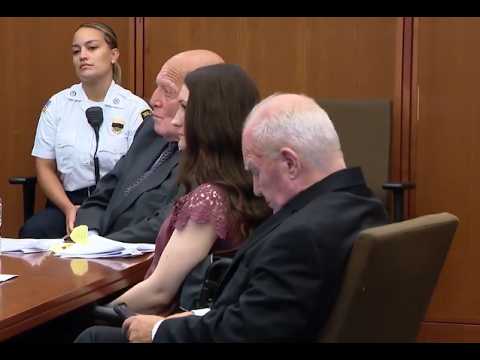 Video · WCVB Channel 5 Boston
Judge rules Lindsay Clancy can be tried again after her mistrial
Judge William F. Sullivan rejected her lawyers' double-jeopardy argument Nov. 9 and turned down prosecutors' request for a gag order. The case returns to court Nov. 16, when he plans to set a trial date.
· 4 min read
Key questions
- Will Lindsay Clancy be retried?
- The judge has cleared the way, but the charges aren't settled. On Nov. 9, 2026, Judge William F. Sullivan ruled that a retrial would not violate double jeopardy. Prosecutors have said they intend to retry Clancy but haven't decided whether to pursue the same charges or a reduced charge, AP reports. The district attorney's office hasn't announced a final decision.
- Why did Lindsay Clancy's trial end in a mistrial?
- The jury deadlocked after about 38 hours of deliberation over seven days, and Judge William F. Sullivan declared a mistrial on Sept. 4, 2026. The defense, and several jurors who have spoken publicly, say the jury was split 11-1 toward finding her not criminally responsible.
- What is the next court date in the Lindsay Clancy case?
- Nov. 16, 2026, in Plymouth County Superior Court, when Judge William F. Sullivan plans to set a trial date. He has said he would like a new trial to begin in March 2027.
- What does lack of criminal responsibility mean in Massachusetts?
- A defendant is not criminally responsible if, because of a mental disease or defect, they lacked substantial capacity to appreciate the wrongfulness of their conduct or to conform their conduct to the law. The prosecution must prove criminal responsibility beyond a reasonable doubt once the issue is raised. The test comes from the Supreme Judicial Court's decision in Commonwealth v. McHoul, 352 Mass. 544 (1967).
Approach the Bench · How you can take part
Watch in person
Hearings are generally open to the public
The next hearing is set for Nov. 16, 2026, in Plymouth County Superior Court, when the judge plans to set a trial date.
Contact your officials
Massachusetts judges are appointed, not elected
The governor nominates judges, and the elected Governor's Council approves them. They serve until age 70. Your Governor's Council member and state lawmakers are the people to contact.
Report a concern
If you believe a judge broke the rules
The Massachusetts Commission on Judicial Conduct investigates complaints of judicial misconduct. It doesn't decide whether a ruling was right; appeals do that.
Disagree with a ruling? Only the people in a case can appeal it. You can still be heard by contacting your officials, voting in judicial elections where judges are elected and telling us what we're missing.
See something? Tell Bench Watch at tips@bench-watch.org. A wrong ruling is a matter for appeal. You can report bias or misconduct by a judge to your state's judicial conduct office.
Watch the court record with us.
Subscribe on YouTube (opens in a new tab)In court and in the news
Clips from the outlets that covered the case, each credited.
Clancy's attorney after the mistrial: "We'll be back"
WCVB Channel 5 Boston · Defense attorney Kevin Reddington, Sept. 4, 2026.
The defense argues a retrial would be double jeopardy
Boston 25 News · Sept. 10, 2026.
The full Sept. 29 hearing
CBS Boston · Clancy in court after the mistrial.