
Kingdom of God Global Church case
United States v. David E. Taylor et al.
Watch the court record with us.
Subscribe on YouTube (opens in a new tab)
Bench Watch Brief · Where this case stands
Federal prosecutors say leaders of the Kingdom of God Global Church used threats of damnation, physical punishment and other abuse to make members work unpaid in church call centers. David E. Taylor, Michelle Brannon and Kathleen Klein are charged and have pleaded not guilty. Nothing has been proven. On Nov. 9, 2026, the judge refused to dismiss the case, and trial is set for April 20, 2027.
The question at issue
Whether threats of spiritual consequences, alongside the other alleged abuse, can be the “serious harm” that makes labor forced under federal law, and whether prosecuting that violates the First Amendment or the Religious Freedom Restoration Act.
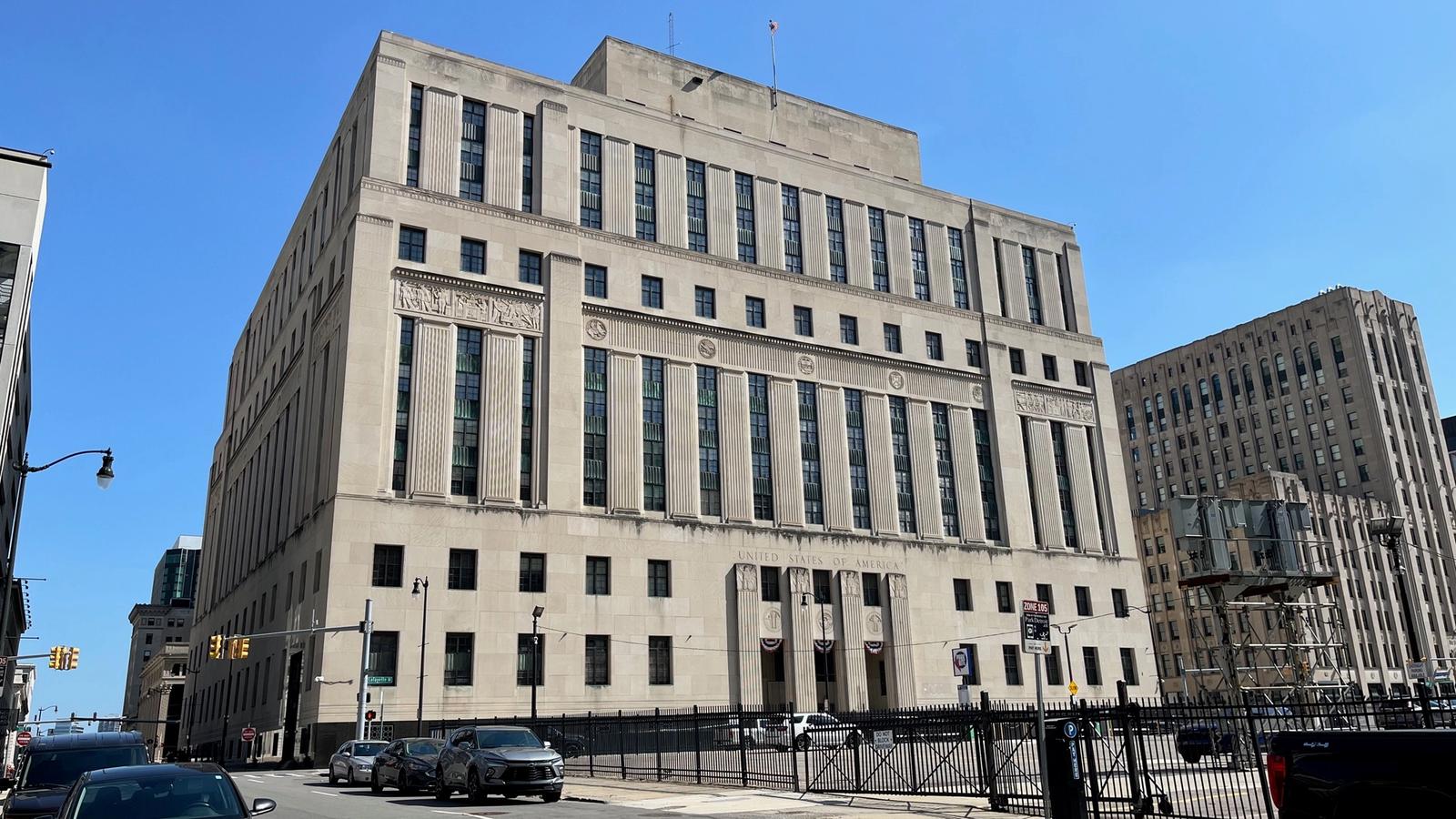
Why we're following it
A federal grand jury indicted David E. Taylor, who, the indictment says, “called himself Apostle,” on one count of conspiracy to commit forced labor, eight counts of forced labor and one count of money laundering conspiracy. It charges Michelle Brannon, whom it describes as the church's executive director, with the conspiracy count, six forced-labor counts and the money laundering conspiracy count. Kathleen Klein, whom it describes as a church executive, faces only the conspiracy count (indictment).
All three have pleaded not guilty, The Roys Report reported; the docket records Brannon's plea in September 2025 (docket). Taylor's lawyers say the workers were adults who joined voluntarily, kept their phones and could leave (WDIV).
The indictment alleges that unpaid call-center workers faced punishments including “physical assault, additional work, sleep deprivation, food restrictions, loss of shelter, psychological abuse, and threats of spiritual damnation,” and that workers were told they would suffer “sickness, accidents, death, and eternal damnation” if they left (indictment).
The indictment also alleges that Taylor directed female workers to perform sex acts and to make sexually explicit pictures and videos for him. The defendants asked the judge to strike those allegations as irrelevant and prejudicial (motion). She refused, calling them “part and parcel of the forced labor conspiracy” (opinion). Bench Watch isn't describing those allegations further.
Bench Watch BreakdownForced laborShow or hide the explanation
- What it means
- Federal law makes it a crime to get someone's work through force, threats or “serious harm.” The harm doesn't have to be physical. It can be harm to someone's mind, money or name.
- In this case
- The indictment says workers were told they would face sickness, death and damnation if they left. Taylor's lawyers say the workers were adults who could leave. A jury will decide.
- Why it matters
- The judge ruled that alleged threats of damnation can count toward “serious harm” when they come with other alleged abuse. A jury still has to decide whether they did here.
Taylor asked the judge to dismiss the case. His lawyers argued that his words and actions are protected religious exercise, and that because the prosecution treats him as a “false prophet,” a jury would have to find his beliefs false to convict him, the judge's opinion says. Brannon filed a similar motion, and Klein joined both (opinion).
On Nov. 9, 2026, Judge Susan K. DeClercq denied the motions. “Even if these actions were religiously motivated, they are all actions,” she wrote. She found that the alleged threats of damnation are “actionable conduct, rather than unprosecutable religious beliefs,” and she noted that “at trial, Taylor remains free to produce evidence that KOGGC members always participated voluntarily” (opinion).
Bench Watch BreakdownReligious Freedom Restoration ActShow or hide the explanation
- What it means
- This federal law protects faith. The government can't make it much harder for you to practice your religion. The only exception is when it has a very strong reason and no gentler way to act.
- In this case
- Taylor said this case burdens his faith. The judge agreed that it does. But she ruled the government met the law's test, writing that “there are no adequate, less restrictive options.” She denied his request on Nov. 9, 2026.
Bench Watch BreakdownCourts can't judge a faithShow or hide the explanation
- What it means
- A court can't decide if a religion is true. In 1944, the Supreme Court said people can't be made to prove what they believe. In its words, they “may not be put to the proof” of their beliefs.
- In this case
- Taylor relies on that case. The judge agreed that jurors can't decide whether his beliefs are true, and she said they must be told so. But she ruled that the conduct the indictment describes can still go to trial.
A federal appeals court kept Taylor in jail before trial in August 2026, saying his detention “is based on his charged criminal conduct, not on his religious beliefs” (Sixth Circuit). On Nov. 10, 2026, Judge DeClercq denied his latest request for release, The Christian Post reported. Brannon and Klein were released on conditions while the case is pending (Sixth Circuit).
Timeline
Judge denies Taylor's latest request for release before trial
Judge refuses to dismiss the case or to strike the sexual-exploitation allegations
The defendants ask the judge to strike the indictment's sexual-exploitation allegations
Prosecutors agree to delay the trial to February 2027 or later
Taylor asks the judge to dismiss the case on religious-freedom grounds
A second superseding indictment is filed; it includes sexual-exploitation allegations
A second judge steps aside, and the case goes to Judge Susan K. DeClercq
Primary documents
- Opinion and order denying the motions to dismiss and to strikeOrder · November 9, 2026
- Defendants' joint motion to strikeBrief · October 8, 2026
- Second superseding indictmentComplaint · July 29, 2026
- Sixth Circuit detention opinionOpinion · August 25, 2026
- Government's response on the trial dateBrief · August 20, 2026
- Order denying Taylor's motion to sealOrder · August 11, 2026
- CourtListener docketOther
- 18 U.S.C. 1589: forced laborStatute
- 42 U.S.C. 2000bb-1: RFRAStatute
Our coverage
 Video · WDIV Local 4
Can a threat of damnation be forced labor? A Michigan church case will test it
Prosecutors say church leaders used fear of God's punishment, along with other alleged abuse, to make members work for free. The defense argued the case puts religious belief on trial. On Nov. 9, a federal judge refused to dismiss it.
· 4 min read
Key questions
- What is David E. Taylor charged with?
- The indictment charges him with conspiracy to commit forced labor, eight counts of forced labor and one count of money laundering conspiracy, in federal court in Detroit. Prosecutors say church call-center workers were coerced into unpaid work. He has pleaded not guilty, and nothing has been proven. His lawyers say the workers were adults who joined voluntarily and could leave.
- Who else is charged?
- Michelle Brannon, whom the indictment describes as the church's executive director, faces the conspiracy count, six forced-labor counts and the money laundering conspiracy count. Kathleen Klein, whom it describes as a church executive, faces only the conspiracy count. Both have pleaded not guilty, and both were released on conditions while the case is pending.
- Can religious teaching be evidence of forced labor?
- In this case, the judge has said it can be part of the evidence. On Nov. 9, 2026, Judge Susan K. DeClercq ruled that the threats of damnation the indictment describes are “actionable conduct, rather than unprosecutable religious beliefs,” and that they may be weighed with the other alleged abuse. She also said jurors can't judge whether Taylor's beliefs are true, and that a case resting only on threats of divine punishment can't stand. Nothing has been proven.
- When is the David E. Taylor trial?
- Trial is set for April 20, 2027, in federal court in Detroit, The Christian Post and The Roys Report reported. The judge's Nov. 9 opinion notes that the parties agreed to exclude the time through April 20, 2027, from the Speedy Trial Act deadline.
- Is David E. Taylor in custody?
- Yes. A judge denied him bond in October 2025, and a federal appeals court upheld his detention in August 2026. On Nov. 10, 2026, Judge DeClercq denied his latest request for release, The Christian Post reported.
Approach the Bench · How you can take part
Learn more
Read the charges yourself
The indictment and many court orders are free on CourtListener.
Disagree with a ruling? Only the people in a case can appeal it. You can still be heard by contacting your officials, voting in judicial elections where judges are elected and telling us what we're missing.
See something? Tell Bench Watch at tips@bench-watch.org. A wrong ruling is a matter for appeal. You can report bias or misconduct by a judge to your state's judicial conduct office.
Watch the court record with us.
Subscribe on YouTube (opens in a new tab)In court and in the news
Clips from the outlets that covered the case, each credited.
Third person charged in the church investigation
CBS Detroit
Church property searched in Houston
FOX 26 Houston